
Coordinating Home and Umbrella Coverage Limits in Nevada
As insurance professionals who have served our community for over half a century, we have seen firsthand how quickly life can change. A beautiful sunny afternoon by the pool or a simple gathering with friends at your Nevada home can suddenly take an unexpected turn. If a guest slips, falls, and suffers a severe injury, the resulting medical bills and legal fees can escalate at a frightening pace.
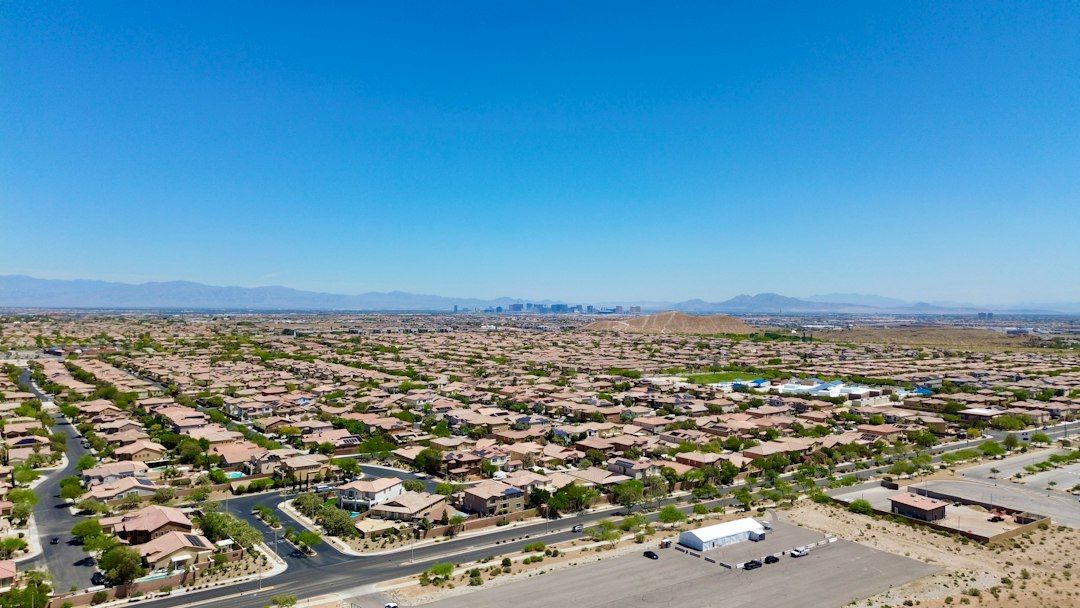
As insurance professionals who have served our community for over half a century, we have seen firsthand how quickly life can change. A beautiful sunny afternoon by the pool or a simple gathering with friends at your Nevada home can occasionally take an unexpected turn. If a guest slips, falls, and suffers a severe injury, the resulting medical bills and legal fees can escalate at a frightening pace. This is where your personal liability protection steps in.
At Larry Peyton Insurance Agency, we have helped people find insurance for over 50 years. With over 100 years of combined expertise among our friendly staff, we know that true peace of mind comes from having a seamless safety net. We often work with clients in their thirties, forties, and fifties who have worked hard to build a life. They own homes, drive multiple vehicles, perhaps own a boat or an RV, and see insurance not just as a mandatory expense, but as a critical shield for their assets.
One of the most vital strategies for protecting your wealth is coordinating your primary homeowners insurance with a secondary layer of defense. In this guide, we will explore exactly how these policies work together, why the limits must align perfectly, and how to avoid costly gaps in your coverage.
The Baseline: Understanding Your Homeowners Policy Limits
When new clients visit our agency to review their protection, they frequently ask, "Exactly how much should I insure my home for?" It is one of the most important questions a homeowner can ask. However, the answer is always divided into two distinct parts: property coverage and liability coverage.
Property Coverage Versus Liability Protection
Figuring out how much you should insure your house for requires you to look at your property from two different angles.
First, there is the physical structure. You need enough dwelling coverage to completely rebuild your house from the ground up in the event of a total loss, such as a devastating fire. This figure is based on local Nevada construction costs, labor rates, and building materials, not the real estate market value of your home. If you are unsure about these building costs, you can review our insights on how much you should insure your home for in Reno.
Second, and equally important, is the personal liability portion of your homeowners policy. This is the coverage that protects you if someone is injured on your property or if you accidentally cause damage to someone else's property. Most standard homeowners policies come with a default liability limit of $100,000. Decades ago, that might have been sufficient. Today, with rising medical costs and increasingly high legal settlements, a $100,000 limit is rarely enough to protect a family with significant assets. We almost always recommend increasing that base homeowners liability limit to $300,000 or even $500,000.
Why Nevada Homeowners Need Higher Liability Limits
Living in Nevada often means enjoying an active, outdoor lifestyle. Many of our clients have swimming pools, trampolines, swing sets, or dogs. We also love to entertain. Every time you host a summer barbecue or invite your child's friends over to swim, your liability exposure increases.
If an accident occurs, the injured party could sue you for medical expenses, lost wages, and pain and suffering. Your homeowners liability coverage pays for your legal defense and any damages awarded, up to your policy limit. But what happens if a judge awards a $750,000 settlement and your homeowners policy only covers $300,000? Without an additional layer of protection, you are personally responsible for the remaining $450,000. That shortfall could force you to liquidate your retirement savings, sell your investments, or even surrender future wages.
The Extra Layer: Defining the Umbrella Policy
To prevent a catastrophic financial loss, insurance carriers offer a secondary layer of protection. We hear this question all the time: what is an umbrella policy and what does it cover?
Think of it exactly like its name suggests. It is a large, overarching canopy of liability protection that sits above your primary policies, including your homeowners, auto, boat, and RV insurance. When you exhaust the liability limits on those underlying policies, the umbrella opens up to provide an additional one million to five million dollars, or more, in coverage.
Expanding Your Protection
If you are exploring an umbrella policy, what does it cover that a standard policy might miss? The beauty of this protection is that it does more than just add higher dollar amounts. It often broadens the scope of your defense.
For instance, people frequently ask us, what does an umbrella policy cover when it comes to personal disputes? Unlike standard auto or home insurance, these overarching policies typically protect you against claims of libel, slander, defamation of character, and false arrest. In an era where a heated online argument or a negative review on social media can easily result in a lawsuit, having protection against defamation claims is incredibly valuable. For a deeper dive into these specifics, we recommend reading our dedicated guide answering what is an umbrella policy and what does it cover.
When you fully understand what a personal umbrella policy covers, you realize it is one of the most cost-effective ways to buy peace of mind. According to the Insurance Information Institute, a standard one million dollar umbrella policy generally costs between $150 and $300 per year [3]. That is a remarkably low premium for a massive amount of financial security.
Bridging the Gap: Coordinating Your Limits
Understanding the individual policies is only the first step. The true secret to reliable protection lies in how these policies communicate with one another. Coordinating your limits ensures that your liability protection transitions smoothly from your primary policy to your secondary policy without missing a beat.
The Attachment Point
An umbrella policy does not provide first-dollar coverage. Instead, it has a specific starting line, known in the industry as the attachment point. Insurance carriers require you to maintain a minimum amount of liability coverage on your primary home and auto policies before the overarching policy will kick in.
For a homeowners policy, the required underlying limit is typically $300,000. For an auto policy, it is often $250,000 per person and $500,000 per accident.
The Danger of a Coverage Gap
Here is where many well-meaning homeowners make a critical mistake. Suppose you purchase a one million dollar umbrella policy that requires a $300,000 underlying homeowners liability limit. A few years later, you are looking for ways to save money, so you lower your homeowners liability limit to $100,000, forgetting about the requirements of your secondary policy.
If a severe accident happens on your property resulting in a $600,000 lawsuit, you now have a massive problem. Your homeowners policy will pay out its maximum of $100,000. However, your umbrella policy is written to only cover damages exceeding $300,000. That leaves a $200,000 gap right in the middle. The insurance company will not cover that gap. You will have to pay that $200,000 out of your own pocket before your overarching protection finally activates to pay the rest.
At Larry Peyton Insurance Agency, we consider it our professional duty to prevent this exact scenario. Because we are large enough to handle complex portfolios but small enough to care deeply about our clients, we conduct comprehensive reviews to ensure your limits are perfectly aligned. You can read more about avoiding these pitfalls in our article comparing personal umbrella insurance versus home and auto liability limits.
Professional Insights: Navigating Liability in 2026
The landscape of personal liability is constantly shifting, and standing still is not an option if you want to protect your family's future. Over our decades in the industry, we have watched lawsuit settlements climb steadily. The concept of "social inflation" means that juries are awarding increasingly larger sums to injured parties.
Recent market data from 2026 highlights that the average personal liability claim in severe residential property incidents can range from $50,000 up to $500,000, with catastrophic cases easily pushing past the one million dollar mark [1]. If a delivery driver slips on an icy walkway at your Washoe County home and suffers a traumatic brain injury, the medical bills alone could exhaust a standard homeowners policy within weeks.
Protecting Future Income
Many people mistakenly believe that if their current bank account balance is low, they do not need advanced liability protection. This is a dangerous myth. In Nevada, if a court judgment exceeds your insurance limits, a judge can order the garnishment of your future wages. This means an accident today could dictate your financial reality for the next twenty years.
Our ideal customer is someone who recognizes that insurance is about securing their trajectory in life. Whether you are 35 and building your career or 55 and preparing for retirement, your future income is one of your most valuable assets. Coordinating your homeowners and overarching liability limits protects the money you have not even made yet.
The Impact of Multiple Properties and Businesses
For clients who own multiple properties, the need for coordination becomes even more pronounced. If you own a primary residence in Reno, a vacation cabin near the lake, and several vehicles, the chances of a liability incident naturally multiply. We take the time to map out every asset. We ensure that the underlying limits on every single property meet the strict requirements of your overarching policy, leaving no exposed gaps in your financial armor.
Checklist: Evaluating Your Liability Needs Today
To help you assess whether your current coverage limits are working in harmony, we have developed a brief evaluation checklist. Ask yourself the following questions:
- Do you know your current homeowners liability limit? Check your declarations page. If the liability limit (Coverage E) is $100,000 or $200,000, it is time to have a conversation about increasing it.
- Do you have attractive nuisances on your property? Pools, hot tubs, trampolines, and even certain breeds of dogs are statistically proven to increase the likelihood of a liability claim.
- Do you frequently host guests? Whether it is hosting your child's sports team, throwing holiday parties, or having extended family stay over, more foot traffic means more risk.
- Does your net worth exceed your current policy limits? Add up your home equity, savings, retirement accounts, and future earning potential. If that number is larger than your homeowners liability limit, you are exposed.
- Do you have teenage drivers in the household? While this relates more to auto insurance, teen drivers are a major source of liability. An overarching policy provides crucial backup when an inexperienced driver makes a costly mistake. If you answered yes to several of these questions, it is highly likely that a standard homeowners policy alone is not enough to keep your family safe. For more guidance on evaluating your specific lifestyle risks, you can review our thoughts on when Reno families should consider umbrella liability insurance.
Conclusion: Crafting Your Perfect Safety Net
Insurance is never a one-size-fits-all product. It is a highly customized safety net that must be carefully woven together. Coordinating your homeowners coverage with a secondary liability policy requires careful attention to detail, a deep understanding of policy language, and a commitment to protecting what matters most.
While we cannot always control the rates set by massive insurance carriers, we can absolutely control how our clients are treated and how thoroughly they are protected. By making sure your underlying limits perfectly match the attachment point of your overarching policy, we eliminate the dangerous gaps that leave families vulnerable. You have worked incredibly hard to build your life, buy your home, and save for your future. Do not let a single unforeseen accident wash it all away.
Call to Action
At Larry Peyton Insurance Agency, our mission is to deliver true peace of mind by offering reliable, personalized insurance solutions that protect your family, your business, and your future. Our knowledgeable and friendly staff rise high above the competition, ensuring you are treated with respect and left highly satisfied with your coverage. We are the perfect sized agency to provide you with great protection at a good price, complete with wonderful service.
Get a quote today and personalized assistance. Discover how we can help you achieve your goals by visiting our quote request form to speak with our experienced team. Let us review your current limits and build a coordinated safety net that works for you.
By Larry Peyton Farmers Insurance & Team
Your local, trusted, insurance professional.
Fast, friendly quotes from top-rated carriers.