
Safety Programs That Can Help Lower Your Workers’ Comp Costs
For many local business owners, paying for workers’ compensation coverage can feel like an unavoidable, fixed cost of doing business. You get your renewal notice, glance at the premium, and hope the market has been kind to you this year. But your premiums are far more within your control than you might realize.
Introduction
For many local business owners, paying for workers’ compensation coverage can feel like an unavoidable, fixed cost of doing business. You get your renewal notice, glance at the premium, and hope the market has been kind to you this year. But the truth is, your premiums are far more within your control than you might realize. Over our 50 years of helping people find the right coverage at Larry Peyton Insurance Agency, we have seen firsthand how taking a proactive stance on workplace safety can drastically change a business’s bottom line.
While we cannot always control the broader insurance market or the base rates set by carriers, we absolutely can help our clients implement strategies that lower their unique risk profile. At our agency, our friendly staff brings over 100 years of combined expertise to the table, and we have learned that the most effective way to reduce your insurance costs is not just shopping for a cheaper rate, but actively preventing claims from happening in the first place.
If you are looking into securing workers' compensation for a small business, understanding the direct relationship between workplace safety and your insurance premiums is essential. In this guide, we will explore practical, proven safety programs, loss-control strategies, and return-to-work initiatives that not only protect your employees but also keep your overhead manageable.
The True Cost of Workplace Injuries
To understand how safety programs save you money, it helps to understand how your premiums are calculated. When you are managing workers' compensation in Nevada, your premium is generally based on your industry classification codes, your total payroll, and your Experience Modification Rate (often called the E-Mod or X-Mod).
Your E-Mod is a multiplier applied to your base premium. It compares your company’s claims history to other businesses of a similar size in your industry. If your business has an average number of claims, your E-Mod is 1.0. If you have fewer claims than average, your E-Mod drops below 1.0, earning you a credit that lowers your premium. If you have a high frequency or severity of claims, your E-Mod rises above 1.0, applying a surcharge that makes your insurance significantly more expensive.
Many business owners mistakenly believe that the only financial impact of an injury is the cost of the claim itself. However, the National Safety Council regularly notes that workplace injuries cost employers billions of dollars annually, and the true cost goes far beyond what the insurance company pays out.
These costs are generally divided into two categories:
- Direct Costs: These are the expenses your insurance policy covers, such as medical bills for the injured employee, rehabilitation costs, and partial lost wages (indemnity payments).
- Indirect Costs: These are the hidden, uninsurable expenses that come out of your own pocket. They include lost productivity, the cost of hiring and training a temporary replacement worker, administrative time spent managing the injury, lowered employee morale, and potentially damaged equipment or product. Because indirect costs can be up to four times higher than direct costs, relying solely on your insurance policy to handle workplace accidents is an expensive strategy. By reducing the frequency and severity of injuries, you protect your E-Mod, maintain your productivity, and keep your overall operating costs low. If you want to learn more about how base rates and premiums are structured locally, take a look at our guide on Workers’ Comp Insurance Costs for Nevada Small Businesses.
Loss-Control Strategies: The First Line of Defense
Loss control is a formal term used in the insurance industry to describe proactive risk management. Instead of waiting for an accident to occur, loss-control strategies focus on identifying and eliminating hazards before they lead to a claim.
When searching for the best workers' comp insurance for a small business, you will find that many top-tier insurance carriers offer complimentary loss-control services. They might send a risk engineer to your property to help you spot potential dangers. However, you do not need to wait for an insurance inspector to start making your workplace safer.
Here are some core loss-control strategies you can implement right away:
Conduct Routine Safety Audits
You cannot fix a hazard you do not know about. Establish a schedule for routine safety walks around your facility or job site. Look for common issues like frayed electrical cords, blocked fire exits, uneven flooring, or improperly stored chemicals. If you run a restaurant, this might mean checking the tread on slip-resistant floor mats. If you run a construction firm, it means verifying that scaffolding is properly secured and fall protection is readily available.
Implement Job Hazard Analysis
A Job Hazard Analysis is a process where you break down a specific task into its individual steps, identify the potential hazards of each step, and determine the safest way to perform the job. For example, if your employees frequently lift heavy boxes, a Job Hazard Analysis would identify the risk of back strain and recommend interventions, such as using a hand truck, requiring a team lift, or redesigning the storage area so heavy items are kept at waist height.
Maintain Your Equipment
Equipment failures are a leading cause of severe workplace injuries. A malfunctioning forklift or a power tool with a broken safety guard can cause devastating harm in a matter of seconds. Keep detailed maintenance logs for all machinery and vehicles, and empower your employees to take damaged equipment out of service immediately without fear of reprimand.
Investing time and capital into these loss-control measures yields an incredible financial return. According to the Occupational Safety and Health Administration (OSHA), businesses see an average return of $4 to $6 for every single dollar invested in their workplace safety programs.
Building a Robust Safety Training Program
Having safe equipment and clear walkways is only half the battle. The other half is ensuring your employees know how to work safely. When finding reliable workers' compensation insurance for a small business, underwriters love to see a company with a documented, ongoing safety training program. It demonstrates that management takes risk seriously, which often makes you eligible for better rates and schedule credits.
A common mistake business owners make is treating safety training as a one-time event that happens during onboarding. A robust safety program must be continuous, relevant, and well-documented.
Tailor the Training to the Job
Generic safety videos do not resonate with employees. Your training needs to be specific to the daily realities of your workplace. If your team works outdoors during the hot Nevada summers, they need specific training on recognizing the early signs of heat exhaustion and heat stroke. If they work in a busy retail environment, they need training on safe material handling and de-escalation techniques for difficult customer interactions.
Utilize Regular Toolbox Talks
You do not need to pull your entire team off the floor for a two-hour seminar every week. "Toolbox talks" are brief, informal safety meetings (usually five to ten minutes long) held at the beginning of a shift. You focus on one specific safety topic each time. One week might cover proper ladder usage, while the next week focuses on the importance of wearing high-visibility clothing in the loading dock. Consistent, bite-sized reminders keep safety top of mind.
Document Everything
If an injury occurs and an OSHA inspector or insurance claims adjuster asks for proof of your safety protocols, verbal assurances will not help you. You must keep physical or digital sign-in sheets for every safety meeting and training session. Documentation protects your business from liability and proves to your insurance carrier that you are actively managing your risk. If you rely on temporary labor to handle busy seasons, managing their training is just as important. You can read more about this in our article on Managing Workers’ Comp for Seasonal and Part‑Time Employees.
The Financial Power of Return-to-Work Programs
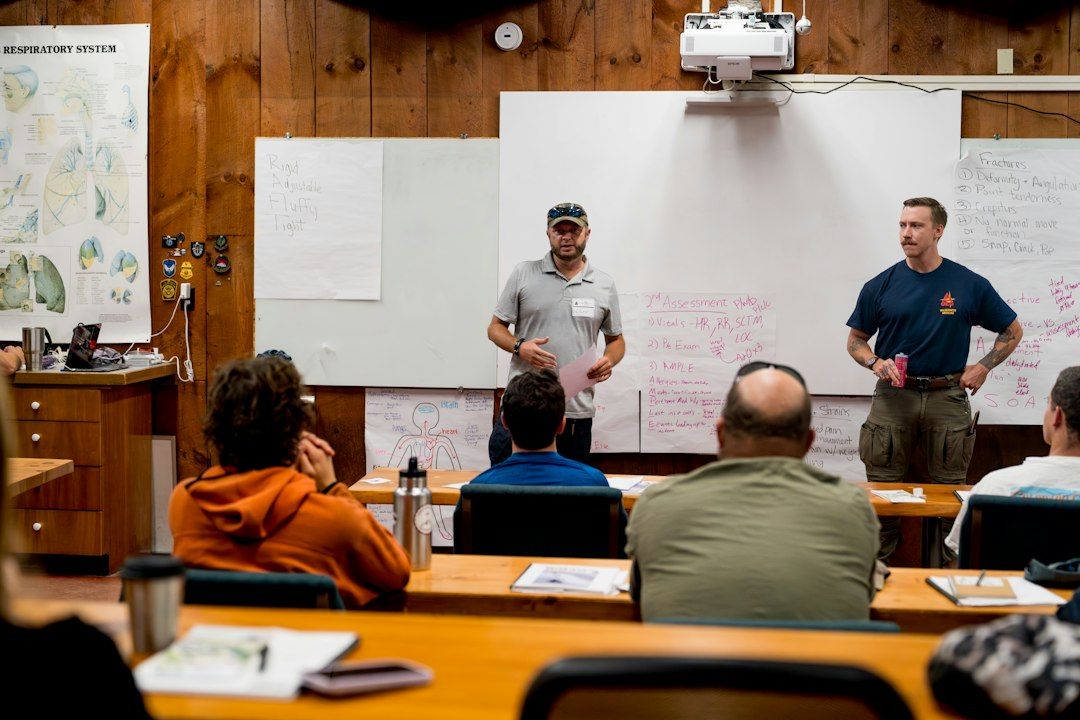
Even with the best safety and loss-control programs in place, accidents can still happen. How you respond to an injury immediately after it occurs has a massive impact on the final cost of the claim. This is where a formal Return-to-Work (RTW) program becomes one of your most valuable financial tools.
A Return-to-Work program is a proactive plan that allows an injured employee to return to the workplace in a temporary, limited-capacity role while they continue to heal. These are often referred to as "light-duty" or "transitional" assignments.
How Return-to-Work Lowers Your Costs
Workers' compensation claims generally fall into two categories: medical-only claims and indemnity claims. Medical-only claims cover the cost of the doctor's visit and treatments. Indemnity claims kick in when the employee has to miss a certain number of days of work, at which point the insurance company begins paying them a portion of their lost wages.
Indemnity claims are heavily weighted in your E-Mod calculation. The rating bureaus view lost-time claims as an indicator of a severe safety issue. By bringing an injured worker back on light duty, you eliminate or drastically reduce the indemnity payments the insurance company has to make. This keeps the total cost of the claim lower and protects your E-Mod from skyrocketing.
Examples of Light-Duty Assignments
Many employers struggle to imagine what an injured worker can do if they cannot perform their normal job. Creativity is key here. Depending on the employee's physical restrictions set by their doctor, light-duty tasks might include:
- Performing inventory counts or organizing supply closets.
- Answering phones, filing paperwork, or handling customer service emails.
- Updating safety manuals or watching advanced safety training videos.
- Greeting customers or handling light quality-control inspections.
The Human Benefit of Return-to-Work
Beyond the financial savings, RTW programs are incredibly beneficial for the injured employee. Being stuck at home dealing with an injury can lead to isolation, depression, and a loss of connection to the workplace. Getting them back into the routine of going to work, even in a modified capacity, keeps them engaged with their team and often speeds up the physical and mental recovery process.
For a deeper dive into how claims and coverage limits work in our state, review our guide on Workers’ Compensation Basics for Nevada Small Businesses.
Insights: Fostering a True Culture of Safety
Over the decades we have spent working with local business owners, we have noticed a distinct difference between companies that just "do safety" to avoid fines and companies that truly embrace a culture of safety.
A safety culture starts at the top. If ownership and management do not take safety rules seriously, the employees will not either. If a manager routinely walks through a restricted area without the required personal protective equipment, it sends a clear message to the staff that the rules are optional.
A survey from Liberty Mutual Insurance noted that 61% of business executives reported saving $3 or more for every $1 they invested in workplace safety. The financial data is clear, but the emotional and community impact is even more profound. Navigating workmans' comp in Nevada should never just be about crunching numbers. It is about ensuring that the people who work hard to make your business successful get to go home to their families in the same condition they arrived.
When employees feel that management genuinely cares about their well-being, morale improves, turnover decreases, and productivity goes up. Safety becomes a collaborative effort rather than a policing activity. Employees start looking out for one another and become proactive in reporting hazards before they turn into accidents. Whether you have fifty employees or you are a solo operator wondering if you need coverage at all, assessing your risk is critical. You can learn more about unique coverage situations in our article Do Sole Proprietors and LLC Members Need Workers’ Comp in Nevada?
Common Mistakes That Undermine Safety Programs
While implementing a safety program is highly recommended, execution matters. We often see well-meaning business owners make a few common missteps that undermine their efforts and leave them exposed to high insurance costs.
Buying Off-the-Shelf Manuals
Purchasing a generic, 200-page safety manual from the internet and leaving it in a filing cabinet does not constitute a safety program. Insurance adjusters and OSHA inspectors look for programs that are actually implemented and actively used by the staff. Your policies must reflect the actual hazards of your specific operations.
Ignoring Near Misses
A "near miss" is an incident where an employee could have been injured, but luckily was not. For example, a heavy box falls off a high shelf and lands just inches away from a worker. Many companies wipe their brow and move on. Highly effective companies treat near misses as free lessons. They investigate why the box fell and fix the underlying issue before the next box actually hits someone.
Delayed Claim Reporting
If an injury does occur, reporting it to your insurance carrier immediately is crucial. Waiting days or weeks to report a claim historically increases the final cost of that claim. Immediate reporting allows the carrier to assign a nurse case manager, get the employee to an in-network occupational clinic, and prevent the injury from worsening or turning into unnecessary litigation. While discussing the overlap of different liabilities, it is also smart to review Combining General Liability and Workers’ Comp Insurance to ensure your business has no gaps in protection.
Conclusion
Setting up workers' comp insurance for a small business is an absolute necessity for protecting your enterprise, but your involvement should not end once the policy is bound. By implementing structured loss-control strategies, engaging your team in consistent safety training, and preparing a robust return-to-work program, you take direct control over your insurance costs.
The initial time and financial investment required to build these safety protocols pale in comparison to the hidden costs of workplace accidents, lost productivity, and soaring premium multipliers. A safe workplace is an efficient, profitable, and highly attractive workplace. By taking these proactive steps, you not only improve your bottom line but also build a culture of trust and care that your employees will respect.
Get a Quote Today
At Larry Peyton Insurance Agency, we believe that you deserve an insurance partner who works as hard as you do. We are large enough to handle all the complexities of commercial insurance, but small enough to truly care about the success and safety of your business. Our friendly, knowledgeable staff has over a century of combined expertise, and we have proudly spent the last 50 years treating our clients with the utmost respect while helping them secure excellent coverage at a competitive price.
Get a quote today and personalized assistance. Discover how we can help you achieve your goals and build a safer, more profitable business. Visit our homepage to request a comprehensive review of your policies and get your personalized quote today.
By Larry Peyton Farmers Insurance & Team
Your local, trusted, insurance professional.
Fast, friendly quotes from top-rated carriers.