
Photography Business Insurance: Covering Equipment, Liability, and More
As a professional photographer, you view the world through a unique lens. You capture once in a lifetime moments, craft compelling brand stories, and turn ordinary scenes into extraordinary art. However, behind every beautiful image is a complex business operation carrying significant risk.
Introduction
As a professional photographer, you view the world through a unique lens. You capture once in a lifetime moments, craft compelling brand stories, and turn ordinary scenes into extraordinary art. However, behind every beautiful image is a complex business operation carrying significant risk. From hauling thousands of dollars of fragile equipment to unpredictable locations, to managing the high expectations of emotional clients, your daily work exposes you to unique vulnerabilities.
At Larry Peyton Insurance Agency, we have spent over 50 years helping people and business owners find the right protection. With over 100 years of combined expertise among our exceptionally friendly staff, we know that generic coverage is rarely enough for specialized professions. We regularly speak with photographers who assume their homeowner policy or a basic business plan will protect them, only to discover glaring gaps when a lens is shattered or a client files a lawsuit.
In this guide, we will explore the essential components of photography business insurance. We will explain how to cover your expensive gear whether you are in the studio or out in the elements, how to protect yourself from liability on location, and how to defend your creative reputation against subjective client disputes. Ultimately, our goal is to give you the knowledge you need to operate with total peace of mind.
Overview: The Changing Landscape of Photography Risks
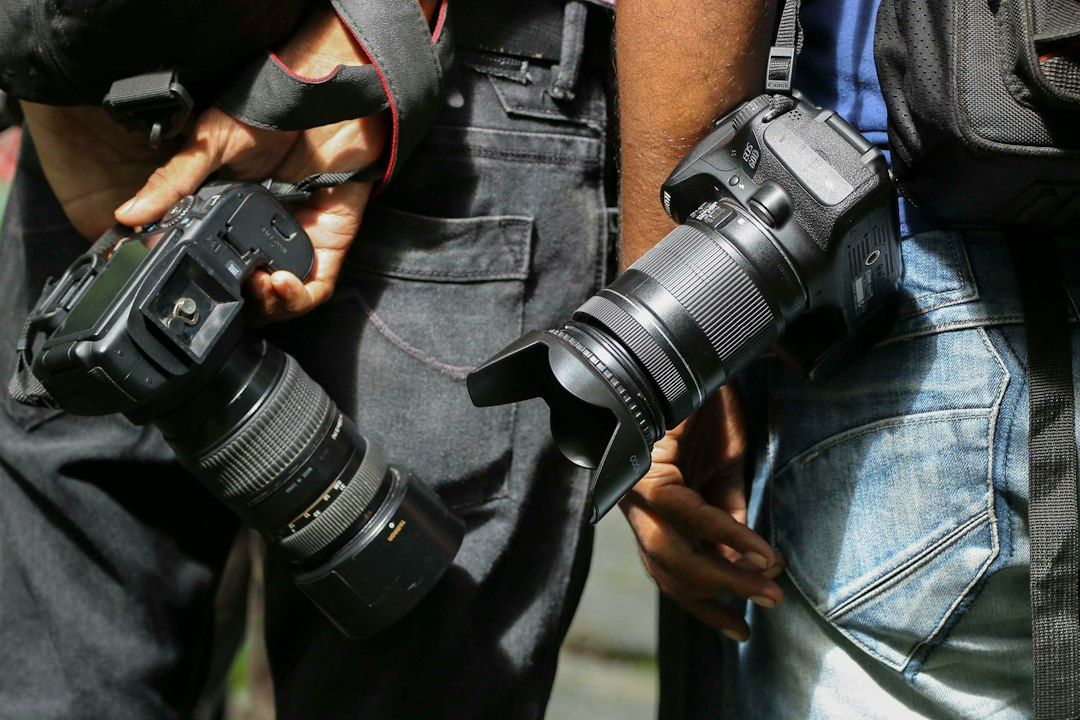
The photography industry has evolved dramatically over the last decade. High resolution digital sensors, intricate lighting systems, and drone technology have raised the bar for professional quality, but they have also raised the financial stakes. Industry data indicates that independent visual journalists and professional photographers routinely carry between $5,000 and $12,000 in essential camera equipment alone to a single assignment. A sudden drop, a spilled drink, or a quick theft can wipe out a massive portion of your business capital in seconds.
Theft is an ever present threat in the photography world. High end cameras and lenses are incredibly valuable and easy to resell on the secondary market. In late 2025, a major camera retail store experienced a devastating break in where thieves made off with nearly $100,000 worth of premium photography gear in less than two minutes. If retail stores with advanced security systems are vulnerable, a photographer's vehicle parked outside a wedding venue is an even easier target.
Beyond physical gear, the legal environment for small businesses has become increasingly complicated. Statistics show that between 36% and 53% of small businesses are involved in at least one lawsuit in any given year. For a photographer, a lawsuit might stem from a guest tripping over a tripod, a memory card corrupting before the images are delivered, or a corporate client claiming your photos failed to meet their marketing requirements. As these risks grow, the global photography business insurance market has expanded rapidly, reaching an estimated valuation of $1.8 billion in 2025. Photographers are recognizing that comprehensive protection is no longer optional.
Many emerging photographers try to cut costs by relying on their personal homeowner or renter policies. If you are running your operations out of a spare bedroom, you might assume your personal policy has you covered. Unfortunately, personal policies typically exclude liabilities arising from business activities and place strict sub limits on commercial electronics. To truly protect your livelihood, you need a commercial policy. For more information on transitioning a side hustle into a protected enterprise, you can read our guide on home based business insurance.
Key Aspects of Small Business Insurance Coverage for Photographers
A robust insurance plan for a photography business is not a single policy, but rather a carefully tailored bundle of coverages designed to address specific hazards. Below are the core components of comprehensive small business insurance coverage for modern photographers.
Protecting Your Gear: Property and Inland Marine Coverage
Your cameras, lenses, lighting rigs, and editing computers are the engine of your business. Standard small business property insurance is highly effective at protecting the assets kept at your primary business address. If a fire breaks out in your studio or a pipe bursts over your desktop editing suite, commercial property insurance steps in to cover the replacement costs.
However, standard property insurance usually restricts coverage to the physical premises listed on the policy. As a photographer, your work rarely stays in one room. You travel to beaches, corporate offices, wedding venues, and remote landscapes. To protect your gear while it is on the move, you need a specialized add on known as Inland Marine insurance, frequently referred to in the industry as an equipment floater.
Inland Marine coverage protects your equipment in transit and on location. If your locked car is broken into while you are grabbing coffee after a sunrise shoot, or if your assistant accidentally drops a $3,000 lens onto a concrete floor at a venue, an Inland Marine policy is designed to cover the loss. When setting up this coverage, it is crucial to insure your gear for its full replacement cost rather than its actual cash value. Actual cash value factors in depreciation, meaning an older camera body might only yield a fraction of what you need to buy a comparable replacement today.
Managing On Site Risks: General Liability
Whenever you interact with the public, you face the risk of third party bodily injury or property damage. General liability is the foundation of any commercial insurance package. If you are shooting a family portrait in a park and a bystander trips over your light stand, breaking their wrist, your general liability policy would cover their medical expenses and your legal defense if they decide to sue.
Similarly, if you are hired to shoot real estate photos at a luxury property and you accidentally knock over an expensive antique vase, general liability steps in to pay for the property damage. You can learn more about how these policies function in our detailed breakdown of what is in a standard business liability policy.
Furthermore, general liability is often a prerequisite for doing business. Most reputable wedding venues, corporate event spaces, and municipal parks will not allow you to shoot on their property without a Certificate of Insurance proving you carry adequate general liability limits. Having this coverage in place ensures you never have to turn down a lucrative gig because of a venue's compliance requirements.
Safeguarding Your Reputation: Professional Liability
While general liability covers physical accidents, it does not cover the quality of your work or financial losses a client might suffer due to your services. This is where small business professional liability insurance becomes absolutely critical. Often called Errors and Omissions insurance, this coverage protects you against claims of negligence, missed deliverables, or failure to perform your professional duties.
Photography is a highly subjective art form, which makes professional liability incredibly important. Consider a scenario where a client hires you for a wedding. You deliver the final gallery, but the client claims your editing style is too dark, or they are furious that you failed to capture a specific photo of a distant relative. Even if their demands were not explicitly written in the contract, they could sue you for breach of contract or professional negligence. Defending yourself against even a frivolous lawsuit can cost thousands of dollars in legal fees. Small business professional liability insurance covers your defense costs, court fees, and any settlements or judgments awarded to the client.
Another massive risk covered by professional liability is data loss. If a memory card corrupts during a once in a lifetime event, or if your hard drive fails before you have safely backed up a client's project, the client may demand a full refund and sue for the cost of restaging the entire event. Professional liability provides a vital safety net for these intangible, yet financially devastating, errors. To understand the nuances between physical and professional risks, review our comparison of general liability vs professional liability.
Building a Safe Team: Workers' Compensation
As your photography business grows, you will likely need to bring on extra help. Hiring second shooters, lighting assistants, or administrative staff introduces a new layer of legal responsibility. If an assistant injures their back carrying heavy equipment crates, or if a second shooter trips and suffers a concussion while navigating a dark reception hall, you are responsible for their medical care and lost wages.
In Nevada, as in most states, workers' compensation insurance is legally required as soon as you hire employees. Even if you only hire part time help or seasonal contractors, misclassifying workers can lead to severe fines and devastating out of pocket medical costs. A robust workers' compensation policy ensures your team is cared for if they are hurt on the job, while protecting your business from workplace injury lawsuits. We outline these requirements extensively in our workers' compensation basics guide.
Defending Digital Assets: Cyber Liability
Photographers manage massive amounts of digital data, including private client galleries, financial payment information, and sensitive personal details. Cyber liability insurance is an increasingly vital component of modern business protection. If your computer network is targeted by a ransomware attack that locks up your entire editing pipeline, or if a hacker accesses your client database and steals credit card information, cyber liability covers the fallout.
This coverage assists with the cost of forensic investigations, data recovery efforts, notifying impacted clients, and providing credit monitoring services. While a professional liability policy covers the client suing you over lost data, cyber liability provides the immediate resources needed to respond to the technological breach itself.
Insights: Understanding the Cost of Insurance for Small Business Operations
When we speak with local photographers, one of their first questions is usually about budgeting. They want to know the cost of insurance for small business operations in the creative sector. At Larry Peyton Insurance Agency, we believe in complete transparency. We cannot control the exact rates set by insurance carriers, but we can help you understand exactly what factors influence your premiums and how to maximize your value.
The cost of your coverage will depend heavily on the specific nature of your business. A commercial photographer who shoots high risk industrial projects at active construction sites will face different premiums than a portrait photographer operating entirely out of a controlled studio space. Insurers evaluate your annual gross revenue, the total replacement value of your scheduled camera equipment, your physical location, and your claims history.
For example, scheduling $30,000 worth of specialized lenses and drone equipment on an Inland Marine policy will naturally cost more than insuring a single $3,000 camera body. However, trying to save money by underinsuring your gear is one of the most dangerous mistakes a photographer can make. If a catastrophic loss occurs, inadequate limits can bankrupt a growing business.
Instead of cutting vital coverages, we recommend looking for safe ways to lower premiums. Implementing strong risk management practices, such as utilizing legally vetted client contracts, maintaining redundant cloud backups for all digital files, and securing your studio with monitored alarm systems, can favorably impact your risk profile. Bundling multiple policies, such as combining your general liability and property coverage into a Business Owners Policy, often yields significant discounts. We cover several practical cost saving strategies in our guide on securing affordable small business insurance.
Getting Ready for Your Small Business Liability Insurance Quote
Taking the step to properly insure your photography business is a milestone worth celebrating. It signals that you are treating your creative passion as a serious, professional enterprise. To ensure the process is smooth and accurate, it helps to gather a few key pieces of information before you reach out to an agent.
When you are ready to request a small business liability insurance quote, we will ask you for a comprehensive inventory of your gear. Take the time to create a spreadsheet listing every camera body, lens, strobe, continuous light, drone, and laptop you use for business. Include the make, model, serial number, and current replacement cost for each item. Keep purchase receipts and photos of the equipment stored in a secure cloud folder. If you ever need to file a claim for stolen gear, having this documentation meticulously organized will drastically speed up the payout process.
We will also ask about your operational details. We need to know your estimated annual revenue, whether you travel internationally for destination shoots, and if you rent studio space or operate out of your home. If you frequently rent expensive cinema cameras or specialized lenses for specific projects, let us know so we can include coverage for rented or borrowed equipment.
Finally, we will discuss your contracts. Having a clearly written contract that outlines your deliverables, cancellation policies, and limits of liability is your first line of defense against client disputes. Insurance is the ultimate safety net, but a strong contract prevents many misunderstandings from escalating into claims in the first place.
Conclusion
Building a successful photography business requires immense talent, relentless marketing, and countless hours of editing. You pour your heart into every frame you capture. Protecting that hard work with comprehensive photography business insurance is not just a regulatory hurdle; it is an investment in your long term stability.
From the physical protection of your valuable camera gear and studio property to the legal defense provided by professional and general liability policies, the right insurance package empowers you to focus on your art rather than your risks. You will be able to confidently hand over a Certificate of Insurance to any high end venue and assure your clients that their memories are safely backed by professional safeguards. While the unexpected is a constant factor in the world of photography, proper preparation ensures that a single accident or unhappy client will not erase the business you have worked so hard to build.
Call to Action
At Larry Peyton Insurance Agency, we are large enough to handle your most complex commercial needs, but still small enough to care about you as an individual. We have helped our community find reliable insurance for over 50 years, and our exceptionally friendly staff is dedicated to treating every client with the respect they deserve. We know the unique risks photographers face, and we are here to craft a policy that fits your specific creative operations. Get a quote today and personalized assistance. Discover how we can help you achieve your goals by visiting us at Larry Peyton Insurance Agency. Let us protect your business so you can focus on capturing the perfect shot.
By Larry Peyton Farmers Insurance & Team
Your local, trusted, insurance professional.
Fast, friendly quotes from top-rated carriers.