
Before You Build: Insurance for a Carson Valley Home Addition or Detached Shop
Before you build in Carson Valley, find out what to ask about coverage during construction, how to price the finished structure, and when to update your policies.
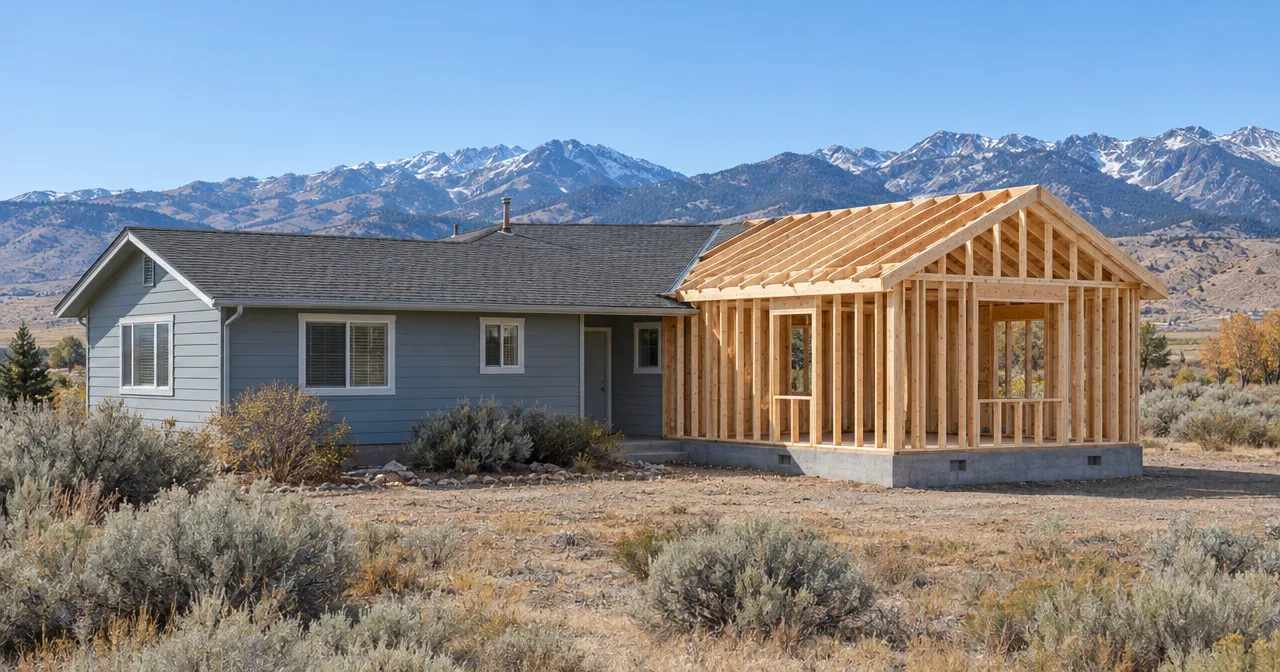
Imagine two projects in the Carson Valley: a Gardnerville family is adding a bedroom and bath, and a household a few miles away is building a shop with enough clearance for a travel trailer. Both owners know what the contractor will charge. Neither bid answers two important insurance questions: What protects the property while the work is underway, and what will it cost to rebuild once the work is done?
Ask those questions before demolition or the first delivery, not at your next renewal. During the job, your house may be partly open to the weather, materials may sit in a supplier’s warehouse, or you may be living somewhere else. Afterward, the house may need a higher dwelling limit, or the new building may need more coverage than the policy provides for detached structures. Here’s how to handle the two decisions without confusing one for the other.
Before work starts: tell your insurer what is changing
Send your insurance professional the scope of work, estimated start and finish dates, project address, and whether you’ll stay in the home. Include anything that could affect how the insurer views the project: a roof that will be opened, a load-bearing wall that will be removed, or plumbing that will be disconnected. For a detached shop, include the size, construction type, utilities, distance from the house, and what you plan to use it for. Say who is managing the build and whether you’ll hire any trades directly.
For a second home, distinguish between a house that’s furnished but used only on weekends, a house that’s emptied for work, and one that’s rented to guests. Give your expected dates away and tell the insurer if heat or water service will change. Ask how your policy defines vacancy and unoccupancy, which conditions apply during the work, and what happens if the schedule slips. Don’t assume a caretaker’s visits, or continuing to pay the premium while you’re away, satisfy the policy’s requirements.
A useful opening question is: “Can you confirm in writing what covers the existing house, the work in progress, and the materials at each stage?” If the answer depends on a future endorsement or separate policy, ask when it must take effect. An updated dwelling limit for the finished home does not, by itself, answer what’s covered during construction.
Separate the original house from the new work
Builder’s risk, sometimes called course-of-construction insurance, is property coverage for specified construction work and materials against covered causes of loss. It’s not the same as the contractor’s liability insurance. And it may not insure the rest of your house. Zurich’s remodeling guidance, for example, describes a policy that can include the existing structure as an option. That’s a useful distinction to look for in any proposal, not a description of what every policy covers.
Suppose high winds damage a temporary opening before the addition is enclosed, and rain then reaches the original living room. The new framing and the old hardwood floor may present different coverage questions. Which policy covers each? Does the form cover that kind of water entry? What conditions apply to temporary protection? If both old and new work are insured, are they valued the same way? Ask about likely weather scenarios as well as fire, theft, and vandalism. For example, ask how the proposed policy would handle wind damage to an unfinished roof or stolen windows stored off-site. Coverage for materials at the job site doesn’t tell you how they’re insured in transit or at a warehouse.
If the construction contract says the contractor will arrange builder’s risk, ask for the policy details rather than relying on that sentence alone. Confirm the insured address, who is insured, the effective dates, what happens to the existing building, the limits and deductibles, and any conditions on storage or occupancy. If you pay for windows or cabinets before delivery, ask when and where they become insured. Also confirm who’ll notify the insurer if expensive change orders increase the project value or a delay pushes completion past the original term.
Verify contractor insurance and check your own liability
Use the Nevada State Contractors Board’s homeowner checklist to verify the contractor’s license status and compare bids for the same work. Separately, ask for current proof of general liability and workers’ compensation coverage, as applicable, and ask how subcontractors are handled. Match the business name on the paperwork to the one on the contract. If you’re hiring trades directly or managing the build yourself, spell that out to your agent before anyone starts. The arrangement matters more than whether you call the project a remodel or a DIY job.
Think of three different incidents: a delivery driver is hurt walking up the driveway; a worker is injured on the job; or a storm damages newly installed framing. Those raise different questions about premises liability, workers’ compensation, and construction property coverage. Check what your homeowners liability policy and personal umbrella say about the job site and whether any changes are needed. An umbrella provides additional liability coverage for eligible claims; it isn’t a fund to rebuild the addition or pay to correct a contractor’s work.
Estimate the finished house and detached buildings separately
The Nevada Division of Insurance’s 2026 home insurance guide distinguishes the dwelling and attached features from other structures, such as a freestanding garage or guest building. It also distinguishes rebuilding cost from the purchase price, which includes land. For an attached addition, ask for a fresh estimate for the whole finished house. Don’t just add the contractor’s bid to the current dwelling limit: that limit may already be based on outdated labor, materials, or square footage.
Give the estimator the finished area, foundation type, roof and siding materials, plumbing and heating details, and features such as custom cabinetry or large windows. For a rural Douglas County property, mention steep or narrow access, unusual site conditions, and permanent utility connections or equipment. Ask how the estimate accounts for the features you actually have. Then review any extended replacement cost provision and ask whether code-upgrade costs after a covered loss are insured separately, and to what limit. If the property is in California, consult the California Department of Insurance’s residential insurance guide and review that address’s policy and disclosures rather than borrowing the assumptions from your Nevada home.
For a detached shop, put a rebuild estimate next to the policy’s other structures limit. If your policy sets that limit at 10% of a $650,000 dwelling limit, that’s $65,000 for other structures. If the shop would cost $95,000 to replace and a detached shed and fencing would cost $15,000 together, the combined estimates exceed that limit by $45,000. Those figures illustrate the math, not local construction pricing or a claim payment. Check whether your actual limit is shared and whether the shop needs a higher or separately stated limit. Include the concrete slab, electrical service, insulation, and oversized doors in the conversation, not just the shell.
Ask how a covered loss to the shop would be valued, too. A replacement-cost provision generally bases payment on repairing or replacing with comparable materials without subtracting depreciation, subject to the policy’s terms and limits. Actual cash value can account for age and condition. The number on the declarations page is a limit, not a promise of what the insurer would pay.
Build for wildfire exposure and check how you’ll use the space
When plans are still on paper, it’s easier to decide where firewood and other combustible items will go, what will surround the structure, and how you’ll maintain it. University of Nevada, Reno Extension’s Living With Fire guide recommends an ember-resistant area in the first five feet around a home, with options such as gravel or pavers instead of combustible mulch. Discuss how those principles apply where the addition meets the house and around a detached building. Ask the insurer what information it wants about the finished roof and exterior, defensible space, and fire access. Keep dated photos and materials records. Mitigation is worth doing for safety, but don’t budget on the assumption that it will earn a particular discount or guarantee coverage.
A building that stores your family’s classic car, boat, or RV is different from one where customers drop off equipment or employees pick up tools. For recreational vehicles, tell the insurer about the new storage address and review physical-damage coverage on each policy. For a classic car, check how the collector policy values it and whether it has garage requirements. The shop’s structure limit is not the limit for damage to the vehicles inside. Review everyday auto liability and the personal umbrella too if the household adds a vehicle, changes where it’s kept, or changes how a pickup is used.
If the shop will double as a business location, describe who will visit, what work will happen there, and what belongs to customers, the business, or the household. The NAIC’s small-business insurance guide explains why personal policies may not cover business property or operations as expected. Ask separately about the building, tools, customer property, general liability, and commercial auto if a pickup starts making work deliveries. For instance, using the shop to service customers’ trailers raises a different set of questions from parking your own trailer there over the winter. If the project also adds a loan the family depends on one person’s income to repay, review that debt in a separate life insurance conversation. Changing the property limit doesn’t address that household obligation.
Arrange the handoff before moving in or moving equipment
Don’t wait until the last invoice to ask when construction coverage ends. Ask whether completion, occupancy, putting the building to its intended use, or the expiration date can end the policy. If you plan to park the RV in the shop while the electrician is still finishing the work, or move back into a completed bedroom before the rest of the project is done, tell the insurer first. Delays and early use can both change the date you need permanent coverage in force.
For the handoff, send final dimensions, photos, major change orders, and any completion or occupancy documents your insurer requests. Ask for written confirmation of the effective date and updated declarations showing the right dwelling or other structures limit. Check that they describe the actual use, whether that’s personal storage, guest space, or business operations. Keep the final paperwork with your plans and invoices so you can find it at renewal or after a loss. The goal is to know which policy protects the property on the first day of work, while the job is underway, and once you start using the finished space.
If you’re planning an addition or shop in Gardnerville or the Carson Valley, Larry Peyton Insurance’s team can walk through your plans with you, explain where your home, specialty, and business policies meet, and help you request quotes or review existing coverage.